Kody Brown Was Going to Defend a Man Who Beat His Wife — TLC Hid It for Years
Fans of Sister Wives have spent years watching Kody Brown present himself as the smiling face of modern polygamy. Week after week, viewers were shown a man determined to convince America that plural marriage was not dangerous, abusive, or oppressive, but simply an unconventional lifestyle built around faith and family. Alongside his wives — Meri, Janelle, Christine, and Robyn — Kody became the public symbol of a movement trying desperately to escape decades of scandal and suspicion.
But now, a deeply disturbing chapter from Kody’s past connections is resurfacing, and it threatens to completely change how fans see both him and the show that made him famous.
According to shocking court records and reports that many viewers never heard about at the time, Kody Brown was once prepared to testify as an expert witness in defense of a man accused of violently abusing his wife. The revelation was never discussed on TLC, never addressed in a reunion special, and seemingly buried beneath the carefully polished image the network spent years creating.
The story begins years before the Brown family started falling apart publicly. Back then, Kody was still at the height of his popularity. TLC had turned the Brown family into reality television stars, and millions of viewers tuned in every week to watch their unusual household navigate marriages, parenting, jealousy, and constant emotional chaos.
At the center of it all was Kody himself — energetic, charismatic, loud, and often frustrating, but undeniably compelling television. More importantly, he served a larger purpose. He was helping normalize polygamy for mainstream audiences.



Kody repeatedly insisted that plural marriage was misunderstood. He argued that women in these relationships were not victims. He claimed they freely chose the lifestyle and found fulfillment through their faith and family structure. For years, that became the core message of the series.
But behind the scenes, Kody’s connections to the Apostolic United Brethren — commonly known as the AUB — tied him to a far more controversial world.
The AUB is a fundamentalist Mormon group built around patriarchal religious teachings and plural marriage. While different from the infamous FLDS church once led by Warren Jeffs, critics have long argued that the AUB still creates unhealthy power imbalances between husbands and wives. Researchers studying these communities have often described systems where women can become isolated, emotionally controlled, or pushed aside when new wives enter the family.
For years, Kody denied that characterization publicly.
Then came the Kyle Henderson case.
Henderson, a Utah man living within the same broader religious culture, faced horrifying accusations after taking a second spiritual wife. Court documents alleged that his first wife became the victim of severe abuse. Prosecutors charged Henderson with six felonies, including assault, domestic violence, witness tampering, and violating a protective order.
The allegations were explosive on their own. But what stunned people paying attention was the appearance of Kody Brown’s name in the legal filings connected to the defense.
Reports indicated that Kody had been listed as a potential expert witness for Henderson’s legal team.
That detail changes everything.
Kody was not allegedly stepping in simply as a supportive friend offering character testimony. According to reports surrounding the case, his intended role would have been much larger and more strategic. Prosecutors planned to argue that the patriarchal structure of the AUB itself helped create the conditions that allowed abuse to happen. They wanted the court to examine whether plural marriage systems could encourage unequal power dynamics where wives lose influence, security, and protection once additional women join the household.
That argument struck directly at the foundation of the lifestyle Kody spent years promoting on television.
And Kody’s potential testimony reportedly would have been designed to push back against that narrative.
He was expected to defend the religious structure itself — to argue that women willingly chose plural marriage, that the AUB did not inherently encourage abuse, and that Henderson’s alleged actions should be viewed as individual failures rather than symptoms of a larger system.
If prosecutors claimed the religious culture enabled violence, Kody’s role would have been to deny it.
That revelation now feels especially uncomfortable for longtime viewers of Sister Wives because the show consistently portrayed Kody as a progressive, emotionally aware husband trying to dismantle stereotypes about polygamy.
Yet behind the cameras, he was apparently willing to step into a courtroom and defend the very structure critics blamed for hurting women.
The situation became even stranger because Henderson’s attorney was reportedly trying to keep polygamy itself out of the trial entirely. If the judge agreed, the religious aspect of the case might never have been discussed before the jury, making Kody’s testimony unnecessary.
In other words, Kody stood in the background like a secret weapon — ready to be used if prosecutors forced the issue of patriarchal religious culture into the spotlight.
And through all of this, TLC remained silent.
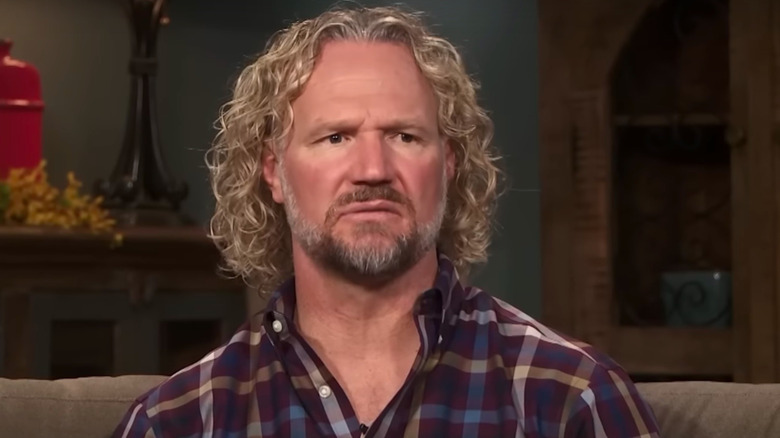
The network never informed viewers that one of its biggest stars had become linked to a felony domestic violence case involving another member of the polygamist community. Fans kept watching storylines about family moves, arguments over property, and emotional disputes between wives without realizing that something much darker was quietly unfolding off-screen.
That silence is now raising major questions.
Why was this never addressed publicly? Why didn’t reunion hosts confront Kody about it? Why didn’t the show acknowledge the controversy when it directly related to the very lifestyle the series claimed to explore honestly?
Critics now argue that the omission was intentional.
For years, TLC benefited enormously from packaging the Browns as relatable and harmless. The network presented them as proof that plural marriage could function peacefully in modern America. A story involving domestic violence allegations and courtroom testimony connected to patriarchal abuse would have shattered that carefully managed image.
So instead, the subject disappeared from the show entirely.
Now, years later, the resurfacing of the case feels even more shocking because Kody himself eventually changed his public stance on polygamy culture.
By 2026, the Brown family had largely collapsed. Christine left. Janelle walked away. Meri emotionally disconnected completely after years of distance and heartbreak. The massive plural family Kody spent over a decade celebrating on television had effectively imploded.
Only Robyn remained fully by his side.
Then came a surprising moment that stunned longtime fans.
While recording personalized messages on Cameo, Kody reportedly described aspects of polygamy culture as “culty.” He spoke about systems where people surrendered their ability to fully control their own lives. Suddenly, the man who spent years defending plural marriage sounded eerily similar to the critics he once fought against.
And that contradiction is what makes this entire story so explosive.
Back in the Henderson case, prosecutors reportedly argued that patriarchal religious systems could pressure women into silence and powerlessness. Kody was prepared to challenge that argument in court.
Years later, after his own marriages collapsed, he seemingly acknowledged that similar dynamics existed.
So which version of Kody was real?
Was the younger Kody genuinely convinced that plural marriage systems were healthy and empowering? Did he sincerely believe the AUB structure had nothing to do with abusive dynamics? Or was he simply protecting his religious community because loyalty mattered more than uncomfortable truths?
And when older Kody later criticized polygamy culture publicly, was that genuine reflection — or an attempt to rewrite history after public opinion turned against him?
Fans may never fully know the answers.
But what remains undeniable is the record itself.
Court filings reportedly connected Kody Brown to the defense strategy in a domestic violence case involving six felony charges. Public reporting existed. The information was available. Yet most viewers never heard about it because the story never made it onto television.
That realization is forcing many fans to reevaluate the entire legacy of Sister Wives.
For years, audiences believed they were watching an honest exploration of plural marriage. But critics now argue the show was carefully curated from the beginning. The Browns controlled their narrative. TLC protected the franchise. And uncomfortable realities tied to the culture surrounding polygamy were often left outside the frame.
Now, looking back, many moments from the series hit differently.
Scenes where Christine expressed loneliness. Moments where Janelle admitted emotional exhaustion. Times when Meri looked isolated and defeated. Conversations about power, favoritism, obedience, and emotional neglect all seem far heavier in light of what viewers now know.
Because behind the cheerful confessionals and family meetings stood a man who, at one point in his life, was reportedly prepared to defend the very religious structure critics claimed harmed women.
And perhaps the most haunting part of all is this: years later, after losing much of the family he fought so hard to protect publicly, Kody himself appeared to acknowledge that those critics may not have been entirely wrong.
That is why this forgotten controversy is suddenly drawing so much attention again. It is not simply about a court case. It is about the massive gap between reality television storytelling and the complicated truth hidden underneath it.
For over a decade, audiences watched the edited version of Kody Brown.
But court documents, public records, and later admissions may have revealed something far more complicated — and far more troubling — than the version viewers were ever meant to see.