LEAKED: Truely “TRAPPED” In Robyn’s Hoarder Maze! Kody EXPLODES!

For years, Kody Brown proudly showcased Robyn’s sprawling Flagstaff mansion as the crown jewel of his family empire—a place he insisted represented stability, love, and success. He painted it as the only truly functional household left standing after the fractures within the Brown family began to widen. In his narrative, this home wasn’t just a residence—it was a symbol of order, loyalty, and everything he believed the family should revolve around.
But beneath the polished exterior and carefully edited television moments, whispers suggest a far more troubling truth. Behind closed doors, the so-called “safe haven” may not have been safe at all. Instead of warmth and unity, insiders describe an environment that felt chaotic, overwhelming, and deeply uncomfortable. And according to mounting speculation, it was the youngest and most perceptive child, Truely, who ultimately exposed what had been hidden for so long.
To understand how everything unraveled, it’s important to look at Kody’s growing desperation. As public opinion increasingly turned against him, he reportedly became fixated on repairing his image. The solution? A highly orchestrated plan involving Truely. He allegedly arranged for her to spend a filmed weekend at Robyn’s house, hoping to present a picture-perfect reunion that would convince viewers—and perhaps himself—that everything was still intact.
This wasn’t just a casual visit. Sources suggest it was a calculated move designed to create a narrative: a happy, blended family thriving under one roof. Kody needed that image to restore his credibility. But the plan carried a darker undertone. Truely was placed in an impossible situation. If she smiled and played along, she would validate the story Kody wanted the world to believe. But if she showed discomfort, she risked being labeled as influenced or ungrateful.


It was, in many ways, a no-win scenario for a young girl.
And yet, what Kody didn’t anticipate was that reality would refuse to cooperate with his script.
For years, fans had speculated about the true state of Robyn’s home. Subtle clues—barely visible in background shots—sparked curiosity. Stacks of unopened boxes, cluttered spaces, and collections of decorative items seemed to accumulate in ways that raised eyebrows. What was presented as a luxurious open-concept mansion began to look, to some viewers, more like a crowded storage space.
Rumors grew louder: the house wasn’t just messy—it was suffocating.
As the day of Truely’s visit approached, the stakes couldn’t have been higher. If the cameras captured anything that contradicted the “perfect home” image, the illusion could shatter instantly. Still, Kody appeared confident. He believed his authority and expectations would ensure everything went according to plan.
But the moment Truely arrived, everything changed. 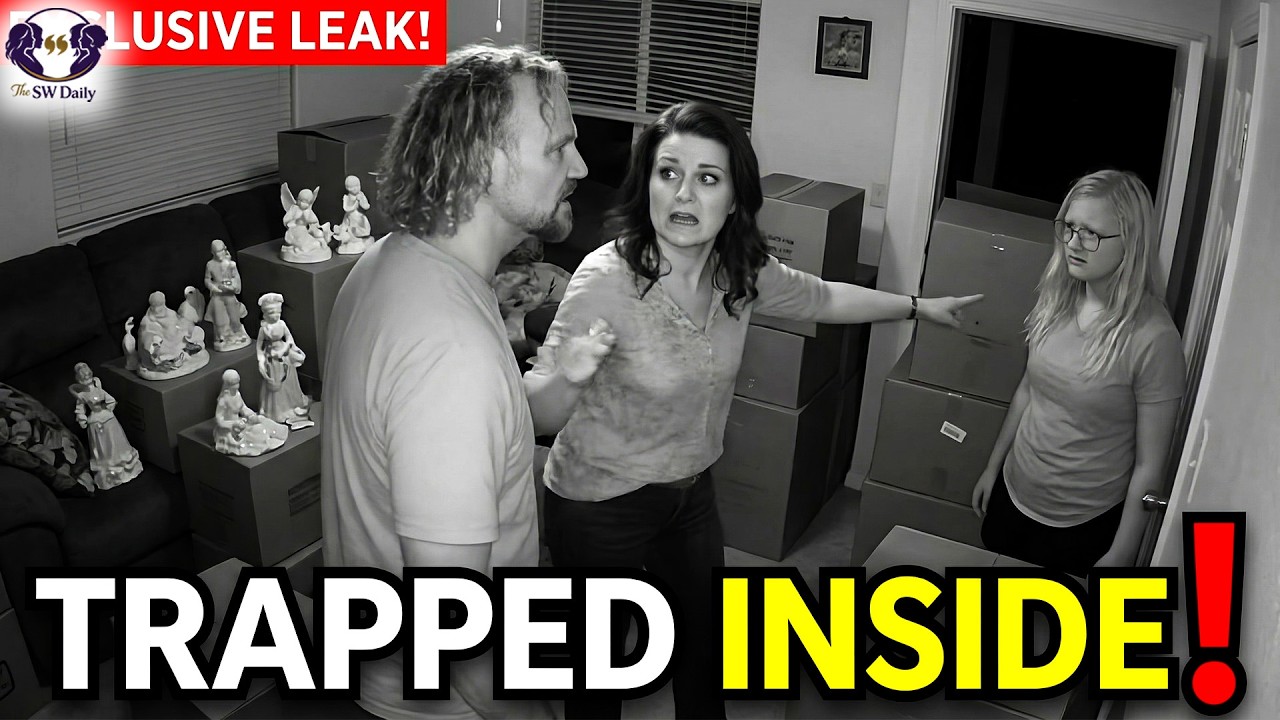
Instead of walking in and embracing the visit, she reportedly froze. The atmosphere shifted almost immediately. What was meant to be a warm welcome turned tense and uncomfortable. Insiders claim Truely hesitated at the door—and then refused to go inside altogether.
It wasn’t subtle. It wasn’t staged. It was raw.
Reports suggest she became visibly distressed, expressing that she didn’t feel safe entering the house. This wasn’t framed as defiance—it was described as instinct. A genuine reaction to an environment that felt overwhelming on both a physical and emotional level.
And that moment changed everything.
Because this wasn’t about conflict between people—it was about the space itself. According to ongoing speculation, the interior of the home had become so cluttered that it created an oppressive atmosphere. Hallways filled with boxes, surfaces covered with items, rooms crowded beyond comfort—it all contributed to a feeling that the house was closing in.
For a child used to more open, balanced environments, stepping into that space may have felt like stepping into chaos.
But instead of recognizing his daughter’s discomfort, Kody reportedly reacted with anger.
Rather than seeing fear, he saw defiance. Rather than offering reassurance, he interpreted the situation as a personal attack. As the situation escalated, he allegedly lashed out—blaming external influences and insisting that Truely’s reaction had been shaped by others.
In that moment, the carefully constructed image began to crumble.
Viewers and fans who later heard about the incident were quick to connect the dots. Old scenes were reexamined. Background details that once seemed insignificant took on new meaning. The narrative of a “perfect home” started to unravel under scrutiny.
And the irony was impossible to ignore.
Kody had spent years criticizing the homes and lifestyles of his other wives, positioning Robyn’s household as the gold standard. Yet now, the very place he held up as ideal was being described as unwelcoming—even unbearable—by his own child.
The fallout didn’t stop there.
Truely’s refusal to enter the house reportedly became a turning point. It wasn’t just a one-time reaction—it evolved into a firm boundary. Sources suggest she made it clear she would not return to that environment. Future visits, if they were to happen at all, would need to take place in neutral, public settings.
That decision carried enormous weight.
It signaled a shift in power—one where a child asserted her emotional needs over her father’s expectations. It also exposed a deeper truth: the house Kody insisted was the center of the family had, in reality, become a place of division.
Other family members reportedly took notice. As details spread, interest in visiting the Flagstaff home diminished. What was meant to be a gathering place turned into a point of avoidance. The distance between Kody, Robyn, and the rest of the family only grew wider.
The mansion, once presented as a symbol of success, began to feel more like a barrier.
And inside it, Kody and Robyn were left to confront an uncomfortable reality—though some say they remained in denial. Instead of addressing the concerns, they allegedly continued to attribute the situation to outside influences, refusing to acknowledge the possibility that the environment itself was part of the problem.
But the consequences were undeniable.
The isolation deepened. The connections weakened. And the image Kody had worked so hard to maintain slipped further out of reach.
In the end, Truely’s decision to stand her ground may have been the most defining moment of all. By refusing to participate in a situation that made her uncomfortable, she forced the truth into the open—whether anyone was ready to face it or not.
Her actions highlighted something fundamental: a home isn’t defined by its size, its cost, or the things inside it. It’s defined by how it makes people feel.
And in this case, the feeling wasn’t safety—it was something far more complicated.
As the dust settles, the Flagstaff mansion stands as a powerful symbol—not of unity, but of what can happen when perception and reality drift too far apart. Kody’s vision of a perfect household may still exist in his mind, but for many of his children, the reality tells a very different story.
And that story is still unfolding.